
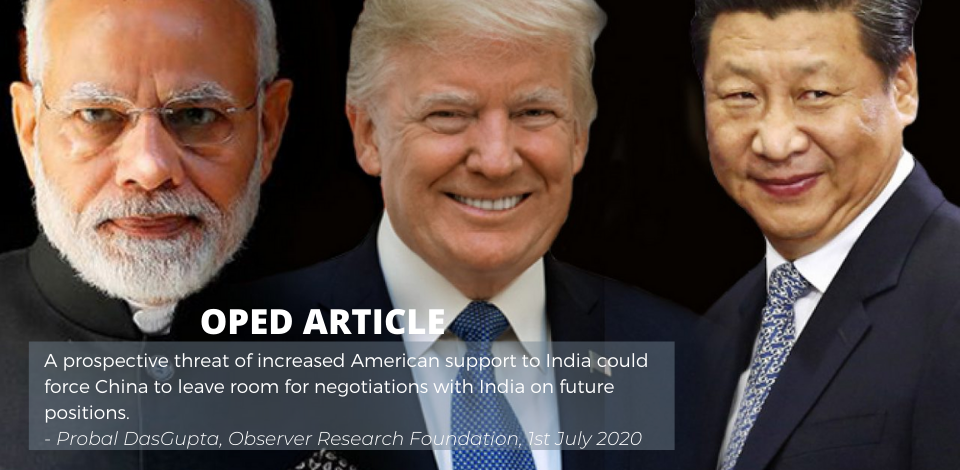
During the 2000 US election campaign, George Bush’s adviser Condoleezza Rice wrote that America needed to pay closer attention to India which was “ an element in China’s calculation and should be in America’s too.”
There is a backstory to this thinking. After the Soviet Union disappeared as a political entity, the early signals of an emerging power arrived during the Asian financial crisis in 1990s. As currencies and stock markets collapsed, the Chinese yuan held steady. China offered more than USD 4 billion in financial aid to the IMF, in contrast to a reluctant United States. In early 2000s, as China began to grow quickly, the US thought to hyphenate India with China. India – a democracy – held out promise to be a key counterbalance against communist China.
The last two decades have witnessed the rise of Asia’s most ambitious political, economic and military powers. India and China graduated from being countries with an unenviable history of two border conflicts in 1960s to argumentative nuclear powers that engage in sparring for surrogate supremacy in the neighbourhood without mounting direct military hostilities against each other.
Read more about the role of the US in Indo-China relations here.


