
In March, as President Hamid Karzai sat with lawmakers over a budget session, explosions ripped through the palace area, forcing the President’s aides to evacuate him as Kabul went into a lockdown. Such incidents aren’t uncommon in Afghanistan where the pro-Taliban Haqqani network masterminds high-profile attacks and threatens to take over the country. Next door, Pakistan struggles to tackle radicalization and often elicits doubts about its survival. In short, the western part of South Asia remains volatile, dangerous and ungovernable.
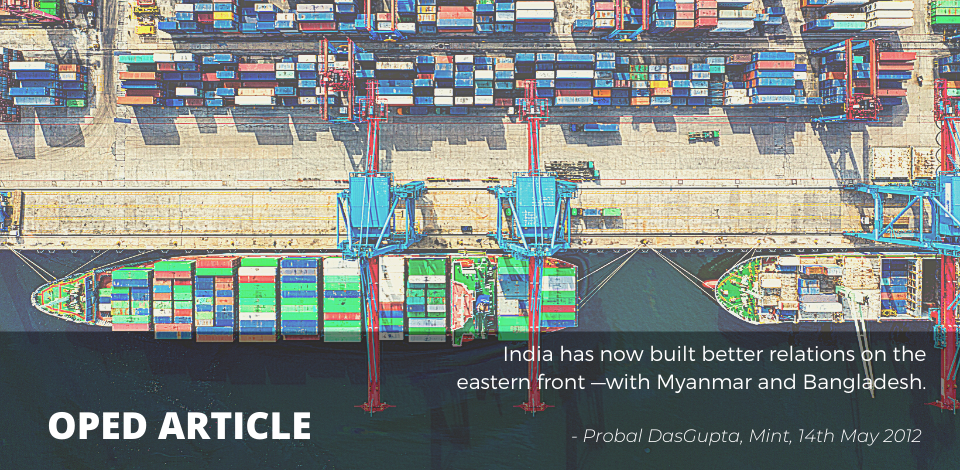
In contrast, developments in the subcontinent’s eastern part saw President Thein Sein’s government open up the world to Naypyidaw after decades. As Aung San Suu Kyi emerged victorious in the recent local elections and Myanmar opened its doors to the world, leaders wasted little time in making a beeline to woo the region’s new queen bee.
As the western part of the subcontinent hurtles towards an imploding anarchy, the eastern part curiously seems headed in the other direction. Though it is early days yet, Myanmar seems to go from being a problem child to a fledgling nation that’s taking baby steps towards global integration. Its neighbour Bangladesh has warded off coup attempts, staved off fundamental elements, laboured towards political stability and moved away from its martial law past.
What do these changes in Myanmar and Bangladesh mean for the region?
Continue reading here.


