
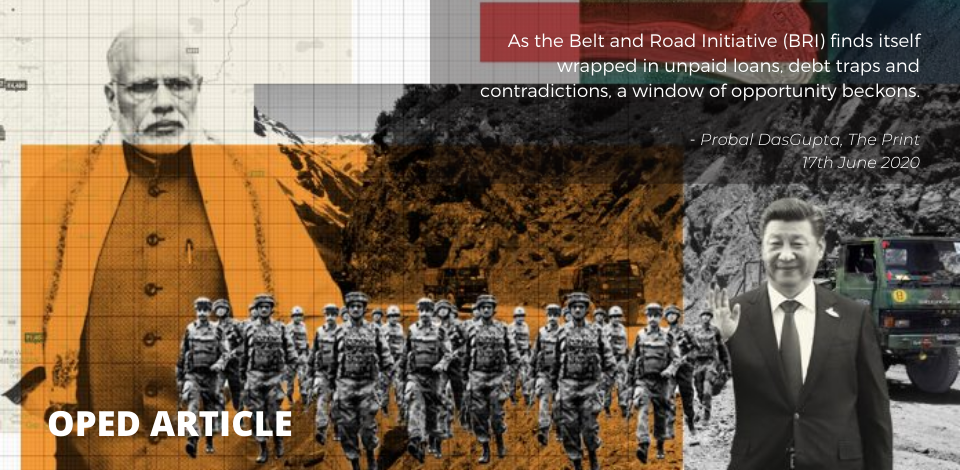
For 45 years, India and China never exchanged fire. So, why should 16 June 2020 go down as the date when an argumentative peace of many decades finally ended as the bloodiest skirmish in a long time.
There are two possible answers. Tactically, the Chinese want to assert their new positions that interfere with Indian movement along the Darbuk–Shyok–DBO road at the Line of Actual Control (LAC). The road enables India to deploy troops quickly. On the strategic front, China wants to play the longer game of deploying the salami-slicing model to obtain a position of dominance and extract concessions from India – without firing a shot. This is a model China has successfully deployed to impose its perception of geographical ownership – whether it’s at the LAC or the South China Sea.
It’s interesting that this decade has witnessed more standoffs between India and China than the four previous decades collectively. It is no surprise that these standoffs have coincided with the emergence of President Xi Jinping and an assertive China. With each standoff, China has stepped up the intensity of its aggression.
Continue reading here.


